
Keeping the Heart Open

Next time you’re on public transport, notice how closed we all are.
Eyes down. Shoulders forward. Breath high in the chest.
I do it too.
And yet on the days I sit up, lift my gaze and look out at the world, I have a better day.
Closed down has become our default.
We miss the elderly person who needs a seat.
We miss the old friend passing on the escalator.
We miss the serendipity that makes life feel alive.
I hold a hope that we wake up to this. That we resist the closing down and choose to open instead.
That’s what I’ve fallen for in Chloé Zhao’s work.
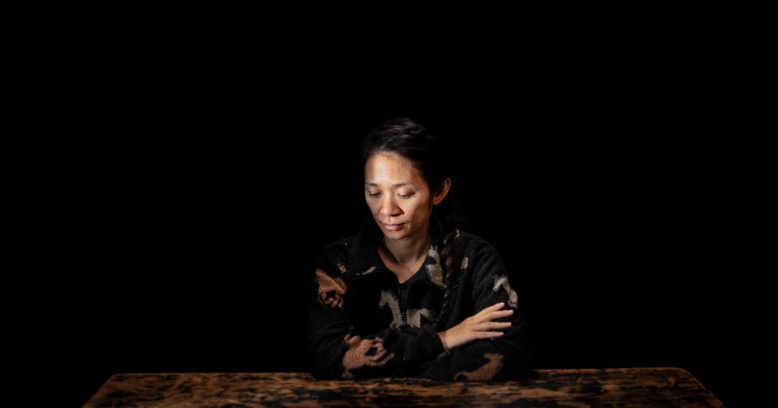
What moves me isn’t only what she films. It’s how she invites us to be present.
At the Toronto International Film Festival premiere of Hamnet, before a single frame rolled, Zhao stepped onto the stage and led 2,600 people through a breathing meditation. Watch it here.
Zhao invites her audience to look around the room and notice what they haven’t seen before.
To place a hand on the heart, if comfortable.
To feel the body settling into the seat.
To take three deep breaths together, with audible sighs.
On the final breath, to gently release one layer of pressure or responsibility. And then to offer a kind inward thought:
“This is my heart. These are our hearts. All of our emotions and feelings are welcome.”
She smiled and added that it was “completely optional” and that it “works exactly the same if you just witness.”
That, to me, is leadership.
Something more than storytelling on a screen.
A reminder to stay open. To stay present.
It echoes Michael Singer in The Untethered Soul:
“Your job is not to protect your heart. Your job is to find out what is blocking it.”
And:
“If you want to be free, you must first accept that you are the one who locks your heart.”
Zhao’s work feels like that. A release of tension through presence rather than protection.
Her characters don’t armour up against loss. They allow it. They register sensation.
They stay open to the living world around them.
In her world, the grief we feel isn’t only about death. It’s also about disconnection. From nature, from one another, from the deeper ground beneath thought.
In a culture that trains us to brace, breath tight, eyes down, scrolling, it’s deeply refreshing to be invited to keep our hearts open. To come home to ourselves. And to the world.
Perhaps the most beautiful example of that openness came when Zhao called cut on the final, wrenching scene of Hamnet. Instead of solemnity, Rihanna’s “We Found Love” blasted through the Globe Theatre. Cast and crew, hundreds of Renaissance costumed extras, began to dance.
“Wigs were lost,” Zhao laughed later.
Grief and joy. Breath and release. The heart stays open.
So here’s a small experiment.
On your next commute, before you reach for your phone, sit back.
Feel your feet on the floor.
Let your shoulders drop.
Take one slow breath into the belly and sigh it out.
Lift your eyes.
Notice one person. One colour. One shaft of light.
Be here now. Fully in this moment. Keep your heart open.

